
Look Mom! I’m on YouTube.
Why making real estate videos isn’t the hard part — figuring out who they’re actually for is.
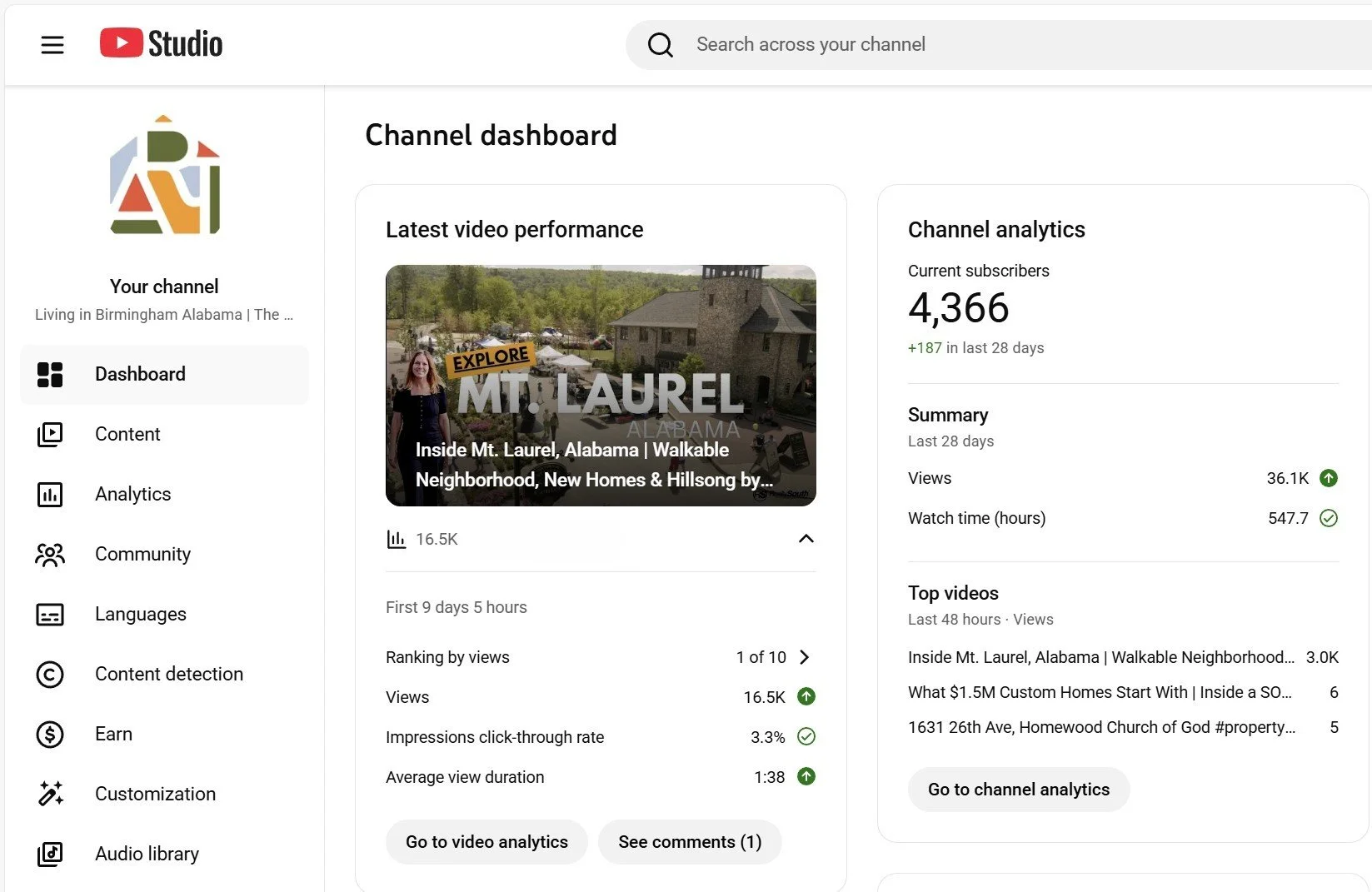
Photo provided by Author
There is a very specific moment that happens after you publish a video.
You sit back. You refresh the page. You wait.
Maybe you text someone you trust. Maybe you don’t. You tell yourself you’re being cool about it.
And then… nothing happens.
No comments. No sudden fame. No algorithmic parade throwing roses at your feet. Just you, your coffee, and a view count that feels… personal.
If you’ve ever been told, “You HAVE to do video!” and then immediately wondered if you were doing it wrong because the internet didn’t respond with fireworks — welcome. You’re in the right place.
This is not a post about going viral.
This is not a post about hacks, hooks, or pointing at floating text while making a surprised face.
This is a post about why most real estate video feels discouraging, why chasing trends is exhausting, and why the answer isn’t more content — it’s better questions.
Everyone Says “Do Video” (They Forgot to Finish the Sentence)
The advice usually stops at “You should be doing video.”
That’s like telling someone, “You should cook more,” and then leaving them alone in a kitchen with no recipe, no plan, and one suspicious onion.
So you start filming:
Market updates
Listing videos
You talking in your car (parked, obviously)
You talking in your car (moving… briefly… before you remembered safety)
You post them.
Nothing happens.
So you pivot.
You see someone else dancing through a house. Desperately, embarrassingly, you try it.
Nothing happens.
Someone else posts a totally unpolished, one-take video filmed in their kitchen.
It explodes.
Now you’re annoyed and confused.
This is usually where people quit.
Or worse — they keep posting, but now everything feels forced, salesy, and slightly desperate. That’s the danger zone.
The Moment I Stopped Trying to Be “Good at Video”
Here’s the uncomfortable truth (which will cost you a lot of time and money to figure you – so pay attention):
Most real estate videos fail because they’re not actually for anyone.
They’re announcements.
They’re updates.
They’re advertisements wearing the disguise of “content.”
At some point, I had to ask myself:
Who is this helping?
What problem does this solve?
Would I watch this if I didn’t already know me?
That was the pivot.
Not better lighting.
Not fancier edits.
Better intent.
Stop Trying to Go Viral. Start Trying to Be Useful.
Virality is a terrible business plan.
It’s unpredictable, uncontrollable, and usually irrelevant to actual buyers and sellers.
What does work?
Answering real questions.
The ones people ask quietly.
The ones that people type into ChatGPT.
The ones they’re slightly embarrassed to ask an agent out loud.
This is where everything changed for me.
Instead of asking:
“What should I post today?”
We started asking:
“What do people actually want to know before they call us?”
That question alone answers:
What to film
How long it should be
Where it should live
Which brings me to the framework we accidentally followed long before we understood it.
The Questions That Actually Matter
At some point, I realized something uncomfortable.
The videos that felt the most awkward (not the most polished) to make were the ones people actually needed.
Not the shiny ones. Not the trendy ones. The practical ones.
The questions people ask quietly.
The ones they Google at midnight.
The ones they don’t always ask an agent directly because they don’t want to sound uninformed.
Once I noticed the pattern, it became obvious.
Buyers and sellers tend to circle around the same handful of concerns before they ever reach out. Not in a neat checklist. More like a loop they keep running until something finally clicks.
So instead of chasing trends, we started organizing our content around those real questions — the ones that come up in nearly every conversation - the ones WE could answer well!
No fancy framework. Just paying attention.
The Money Questions (Because Let’s Not Pretend They Don’t Exist)
If your content avoids price entirely, people notice.
They don’t expect an exact number. They expect honesty.
In real estate, this shows up as questions like:
“What does it actually cost to sell a home?”
“How much do I pay my agent?”
“Why do two houses with the same square footage sell for wildly different prices?”
“What really drives the cost of building versus buying?”
Talking about money doesn’t scare people away.
It puts them at ease. It helps them lower their guard.
Video works especially well here because nuance matters. You can explain variables, context, and expectations without sounding like a disclaimer page.
The Stuff That Can Go Sideways
This is where trust actually starts.
These are the conversations most people avoid — which is exactly why they matter.
Things like:
“Why a listing may not sell”
“What makes buyers quietly disappear”
“When new construction isn’t the right answer”
This isn’t about trashing competitors or scaring people.
It’s about naming reality.
When you talk about potential problems before someone experiences them, you stop sounding like a salesperson and start sounding like someone who’s been through this before.
The Constant Comparing (Because Everyone Does It Anyway)
Buyers compare everything.
Neighborhoods.
Builders.
New versus resale.
Renovate versus move.
If you don’t help them think through those comparisons, they’ll piece it together elsewhere — usually without context.
Comparison-style videos work because they meet people exactly where they are: stuck between options.
The key is being upfront about trade-offs.
Every option has them.
Saying that out loud builds more trust than pretending there’s a perfect answer.
The “What’s It Really Like?” Conversations
This isn’t about five-star testimonials.
It’s about experience.
These are the videos and posts that sound like:
“What surprised my clients after closing”
“What people wish they’d known sooner”
“Why people actually love this neighborhood”
People aren’t looking for perfection.
They’re looking for clarity.
Helping People See the Whole Landscape
Everyone wants to understand their options before committing.
Best neighborhoods.
Best builders.
Best timing.
You don’t have to declare winners.
You just have to explain the differences.
When you do that well, you naturally position yourself as the guide — not the hero of every story.
And guides are the people buyers trust.
Where You Put the Content Matters (A Lot)
Posting is not a strategy.
Distribution is.
A YouTube video is not the same thing as an Instagram Reel.
A website blog is not the same thing as a Facebook post.
Ask:
Who is this for?
Where would they actually look for this?
Long-form, thoughtful answers belong on your website and YouTube.
Short-form belongs where attention spans live.
One piece of content can — and should — live in multiple places, with intention.
Do you have an actual method?
Here’s what we’ve learned the hard way:
Video is not about performance
Consistency beats creativity (but creativity helps!)
Helpfulness beats hype
We don’t make content to impress other agents.
We make it to answer questions we hear every week.
And yes — some videos still do nothing.
That’s fine.
Because the right person eventually finds the right video at the right time.
And when they call, they already trust you.
That’s the whole point.
Final Thought (From Someone Who Has Refreshed the View Count)
If you’re discouraged by video, you’re not failing.
You’re just asking the wrong question.
Stop asking:
“Why isn’t this performing?”
Start asking:
“Would this genuinely help someone?”
Do that consistently, and the rest starts to fall into place.
And if nothing else — at least now you can say:
Look mom. I’m on YouTube!
